Neurodiversity is the idea that our brains are diverse and that there is no one way to think, behave, or communicate.
Importantly, neurodiversity refers to all of us. Every person has a unique cognitive profile. The term neurodivergent describes individuals whose brains work in ways that diverge from what is considered the ‘norm’ (neurotypical)…and in most organisations, neurodivergent individuals make up far more of the workforce than leaders realise.
This is not just a wellbeing conversation or an box-ticking exercise. It is a performance conversation, a leadership conversation, and increasingly, a competitive advantage conversation.
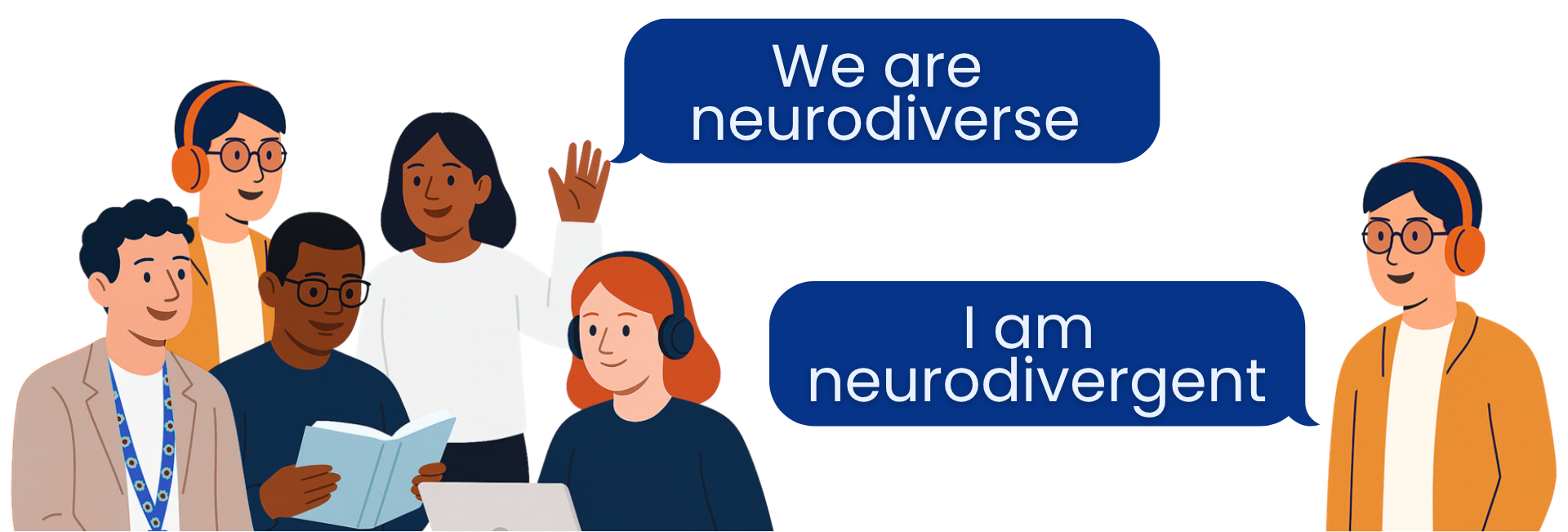
Neurodivergence takes many forms, and it is worth noting that many people experience more than one simultaneously.

Each of these exists on a spectrum. No two neurodivergent individuals are alike, and that is precisely why a one-size-fits-all approach to support rarely works.
The business case for neurodiversity is compelling, and it goes well beyond compliance. Neurodiversity is about empowering your people, and the business.
Research consistently shows that teams with cognitive diversity outperform those without. The organisations that act now will be the ones that attract better talent, retain more of it, and build cultures where everyone does their best work.
There is also a very real legal dimension. Under the Equality Act 2010, employers are required to make reasonable adjustments for neurodivergent employees. What many managers don't realise is that they are not legally permitted to ask an employee whether they are neurodivergent - yet they are expected to implement support if they recognise traits and challenges, regardless of disclosure. That is an uncomfortable position to be in without proper training and frameworks, and it's one of the main reasons tribunal cases are rising.
Beyond the legal risk, there is a straightforward performance argument. Neurodivergent employees who are well-supported contribute more, stay longer, and bring the kind of thinking that drives innovation. Those who are not supported tend to progress more slowly, burn out more frequently, and eventually leave, taking their talent with them.
The neurodiversity gap is the difference between an organisation's intention to be inclusive and its actual ability to support neurodivergent employees in practice. In most organisations, this gap is significant and growing.
When neurodiversity support is absent or inconsistent, the consequences are real and measurable.
Attrition. 50% of neurodivergent employees are actively considering leaving organisations where they feel unsupported. The cost of replacing a single employee is typically one to three times their annual salary.
Legal risk. Tribunal claims related to neurodiversity are increasing year on year. Constructive knowledge - meaning what a reasonable employer ought to have known - is a growing basis for claims, even where no formal disclosure was ever made.
Invisible underperformance. When neurodivergent employees are working in environments not suited to how their brains work, performance suffers. But the root cause is rarely identified correctly. Instead, it gets managed as a conduct or capability issue which compounds the problem and increases legal exposure.
Wasted investment. Organisations that run one-off awareness sessions or launch policies without building genuine confidence across their management population rarely see lasting change. The knowledge fades. The behaviours don't shift. And the gap remains.
Even organisations that genuinely want to do better often find themselves stuck. Here are the barriers we encounter most often.
Awareness without confidence. Many managers have attended a lunch-and-learn or completed a short e-learning module on neurodiversity. But awareness is not the same as confidence. Knowing what ADHD is does not tell a manager how to respond when someone discloses it, how to have that conversation sensitively, or what adjustments are reasonable. The gap between knowing and doing is where most programmes fail.
Taught fear. This is something we see consistently. When people believe a topic is difficult, technical, or "not for them", they disengage before they've even started. Managers tell themselves that neurodiversity is a specialist HR matter. Employees tell themselves they're not the type to speak up. These beliefs are learned — and they can be unlearned, but only in the right environment, with the right approach.
Psychological safety. Disclosure rates are low not because neurodivergent employees don't want support, but because they don't trust that disclosing will lead to support rather than stigma. What we've found is that neurodivergent employees are far more likely to disclose to a trusted peer than to their line manager — and that changes everything about how you design a programme.
Cultural and structural inconsistency. Without a clear framework and shared language across the organisation, support becomes dependent on the individual manager. Some are brilliant. Others are well-intentioned but underprepared. And a small number carry old assumptions that neurodiversity isn't real, or isn't their problem. Changing that requires more than policy — it requires a deliberate shift in culture, from the top down and the bottom up.
The data problem. Most organisations genuinely don't know how many of their employees are neurodivergent. Internal surveys consistently undercount because employees don't trust the data will be acted on, or they fear it isn't truly anonymous. What we've seen time and again is that disclosure rates are three to seven times higher when gathered as part of a well-designed programme, led by someone with lived experience. You cannot solve a problem you cannot see.
With the best of intentions, organisations often fall into predictable traps when it comes to neurodiversity.
Running a one-off awareness session and calling it done. A single webinar raises the topic but rarely changes behaviour. Without ongoing, role-relevant learning, the knowledge fades and managers are left no more equipped than before.
Focusing only on managers. Manager capability matters enormously. But if neurodivergent employees don't also receive support around self-advocacy, understanding their own strengths, and navigating adjustments, then you've only addressed half the problem.
Treating it as an HR-only initiative. Neurodiversity touches every team, every department, and every level of seniority. Programmes that sit solely within HR rarely achieve the cultural traction needed to make lasting change. Senior leadership visibility and middle manager buy-in are both essential.
Relying on disclosure without creating safety first. Asking employees to self-identify before building psychological safety is putting the cart before the horse. People will not disclose into a vacuum. The culture has to come first.
Measuring the wrong things. Attendance figures and completion rates tell you very little about whether anything has actually changed. Real impact shows up in disclosure rates, manager confidence scores, reduced tribunal risk, retention, and the quality of conversations happening day-to-day.
Ignoring the legal dimension until it's too late. Many organisations only start thinking seriously about neurodiversity after a tribunal claim or a formal complaint. By then, the reputational and financial cost is already significant. Building capability proactively is always cheaper than managing the fallout reactively.

Organisations that do this well share a few common characteristics.
They start with genuine curiosity about where their people actually are, not where they assume they are. They assess knowledge and confidence before designing any training, so learning is placed at the right level for each individual rather than defaulting to a one-size approach.
They engage both sides. Managers learn how to have confident, legally sound conversations around neurodiversity, adjustments, and disclosure. Neurodivergent employees get support that's relevant to them around self-advocacy, strengths, and navigating workplace challenges. Neurotypical employees understand how to be genuinely supportive colleagues.
They build psychological safety before asking for disclosure. They bring lived experience into the design and delivery of the programme, not as a token gesture, but as a genuine input that shapes what gets built and how it lands.
And they think long-term. A well-designed neurodiversity programme isn't a project with a start and end date. It's a shift in how an organisation operates. The organisations that see the biggest returns are those that treat this as an ongoing commitment, not a one-off initiative.
We work with organisations across sectors to close the neurodiversity gap through a whole-organisation approach that combines change management, education, and long-term support.
If you are ready to move beyond awareness and start building genuine capability, we would love to talk.
Neurodiversity Audit: Quantitative & Persona Baseline Assessment


Customised Change Management Strategy
Executive Awareness & Engagement Campaign
Multi-Channel Delivery (In-Person, Online, E-Learning)
Tailored Learning Pathways for All Employee Groups
Customised Course Content
ROI Tracking
Hand-In-Glove-Culture Partner
Continuous Long-Term Strategic Guidance
Reach out today to learn how our bespoke solutions can improve manager confidence, employee experience, and ensure compliance.